How does the Cheaper Home Batteries Program work?
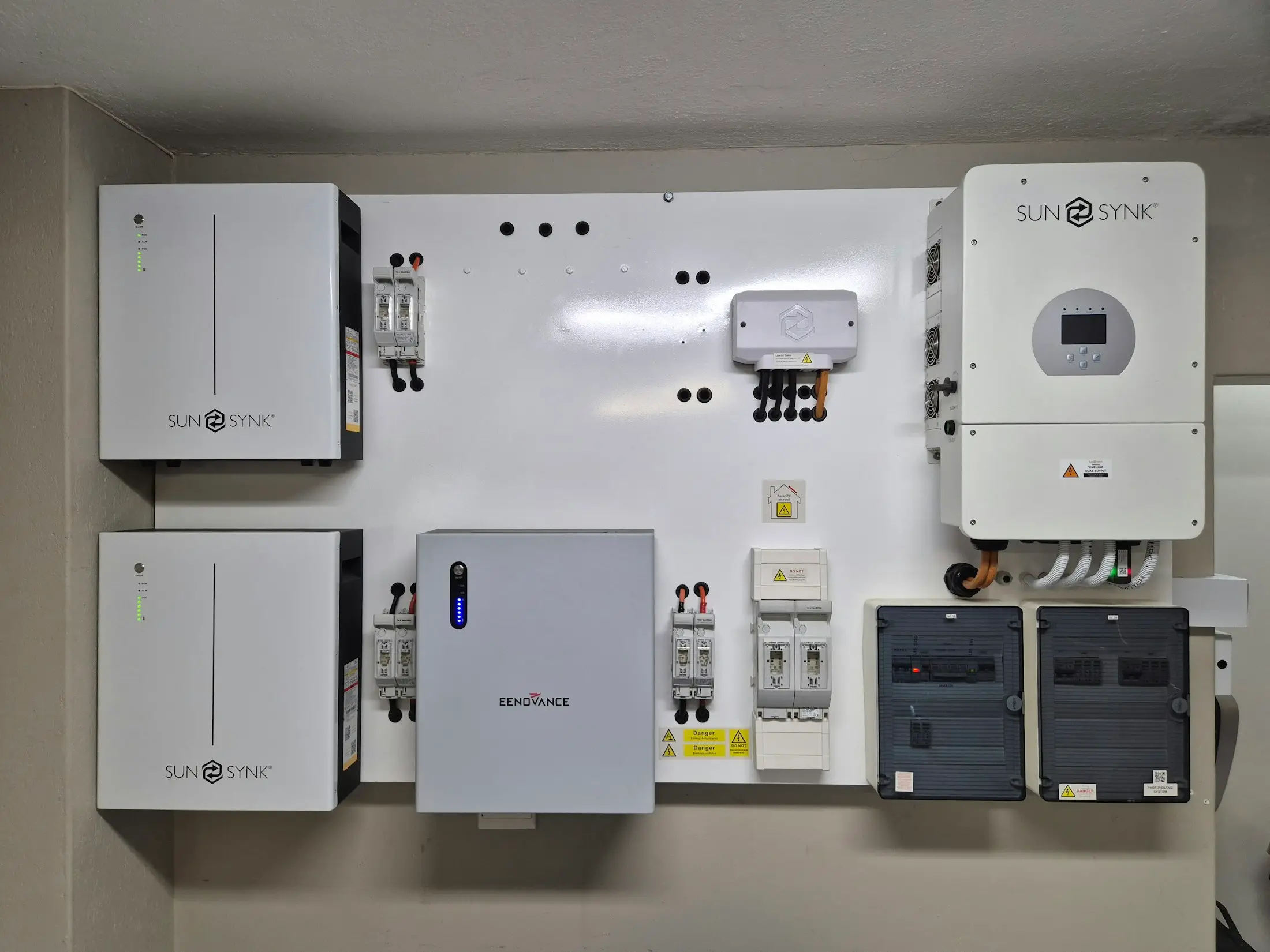
The Cheaper Home Batteries Program is a federal discount of roughly 30% off the upfront cost of an eligible home battery installed with rooftop solar. It started on 1 July 2025, and it works whether your solar is brand new or has been on the roof for years.
The saving comes from small-scale technology certificates (STCs). Your battery creates STCs, you assign them to your retailer or installer, and they take the value off your price. So you see the discount on the quote rather than waiting for a cheque.
The Clean Energy Regulator says the battery must be:
- Installed with a new or existing rooftop solar system
- New, and on the Clean Energy Council’s approved battery list
- Between 5 and 100 kWh nominal capacity
- Installed by a Solar Accreditation Australia (SAA) accredited installer with a battery endorsement
- Technically capable of joining a virtual power plant (VPP), if it’s connected to the grid
- The only battery claiming STCs at that property
How much is the battery rebate?
The battery rebate is designed to save you about 30% on the upfront cost. The exact dollar figure depends on the battery’s usable capacity, the date it’s installed and the STC value your retailer applies.
That’s why two quotes for similar batteries can show different discounts. Ask each retailer to list the STC discount as its own line, so you can compare prices before and after.
What changed on 1 May 2026?
From 1 May 2026, the STCs a battery earns are tiered by size, so larger batteries get proportionally less per kWh. The discount is also adjusted over time as battery prices fall, with the aim of keeping the saving at about 30%.
| 1 July 2025 to 30 April 2026 | From 1 May 2026 | |
|---|---|---|
| How STCs are worked out | The same rate for every kWh of usable capacity | Tiered by size: larger batteries earn proportionally less per kWh |
| Target saving | Roughly 30% off the upfront cost | About 30%, adjusted over time as battery prices fall |
| Other eligibility rules | Solar, approved battery, accredited installer | Unchanged |
Program funding has also been expanded to an estimated $7.2 billion over four years. On the solar side, rooftop solar STCs come from the Small-scale Renewable Energy Scheme, which runs until the end of 2030, with the discount stepping down each year.
How do I get a battery installed with the discount?
It’s straightforward once you know the order. Here’s how to go from “thinking about it” to a charged battery on the wall.
- 1
Understand your usage
Grab a year of power bills and note when you use the most energy. It’s the best guide to whether a battery suits you, and what size.
- 2
Get several quotes
Ask two or three retailers to quote. Check they use SAA-accredited installers with a battery endorsement.
- 3
Check the battery and inverter
Confirm the battery is on the CEC approved list and that the system, including any existing inverter, can join a VPP.
- 4
Confirm the STC discount
Make sure the quote shows the discount applied at the point of sale, and that you’re assigning your STCs to the retailer.
- 5
Look for state extras
See whether your state offers its own rebate or loan, and whether it can be combined with the federal discount.
- 6
Sort out the balance
Decide how you’ll pay what’s left, from savings, a home battery loan or another option.
- 7
Install, then keep it safe
Keep your paperwork, and have the system safety-checked every year by an SAA-accredited electrician.
Can I combine federal and state battery incentives?
Sometimes. The Clean Energy Regulator says you may also be eligible for a state or territory battery program, but some programs may not be available if you’re claiming STCs. Check whether you can claim both before you sign.
- Victoria: the Solar Homes Program; see solar.vic.gov.au for current offers
- Western Australia: the WA Residential Battery Scheme offers rebates and no-interest loans for eligible households
- Other states and territories: offers change regularly, so check your state energy department’s website
Eligibility and amounts change often, so check what your state offers at the time you get quotes. Your retailer should also know which local incentives apply.
How do I pay the rest of the battery cost?
Once the discount comes off, there’s still a balance to cover. Most households use savings, finance or a mix of both.
| Option | Good to know |
|---|---|
| Savings | No repayments, but it can dip into your emergency buffer |
| Home battery loan | A personal or green loan for the battery, repaid over a set term |
| Home loan top-up or redraw | Can suit homeowners with equity, though you may repay it over many more years |
| State no-interest loan | Offered in some states for eligible households, such as WA’s scheme |
| Retailer payment plan | Check the total cost and terms, and compare it with a loan |
If a loan makes sense, tell us what it’s for and we’ll search our panel of 60+ lenders for a home battery loan that fits your budget. The form takes about 2 minutes and won’t affect your credit score.
Adding panels at the same time? Our solar loans page covers financing a full solar-and-battery setup.
What you’ll need
- Recent electricity bills showing your usage
- Details of your existing solar system and inverter, if you have one
- Two or three written quotes
- Proof the installer holds SAA accreditation with a battery endorsement
- The battery model, to check it’s on the CEC approved list
- ID and income documents, if you’re financing the balance
- Your state’s battery program rules, if one applies
Who it usually suits
- The battery is installed with new or existing rooftop solar
- It’s a new battery on the CEC approved list, between 5 and 100 kWh
- It’s installed by an SAA-accredited installer with a battery endorsement
- A grid-connected system can join a virtual power plant
- Only one battery per property claims STCs
- For finance: steady income and a credit history lenders can assess